
Box and valley gutters on commercial roofs: why they block and how often to clear them
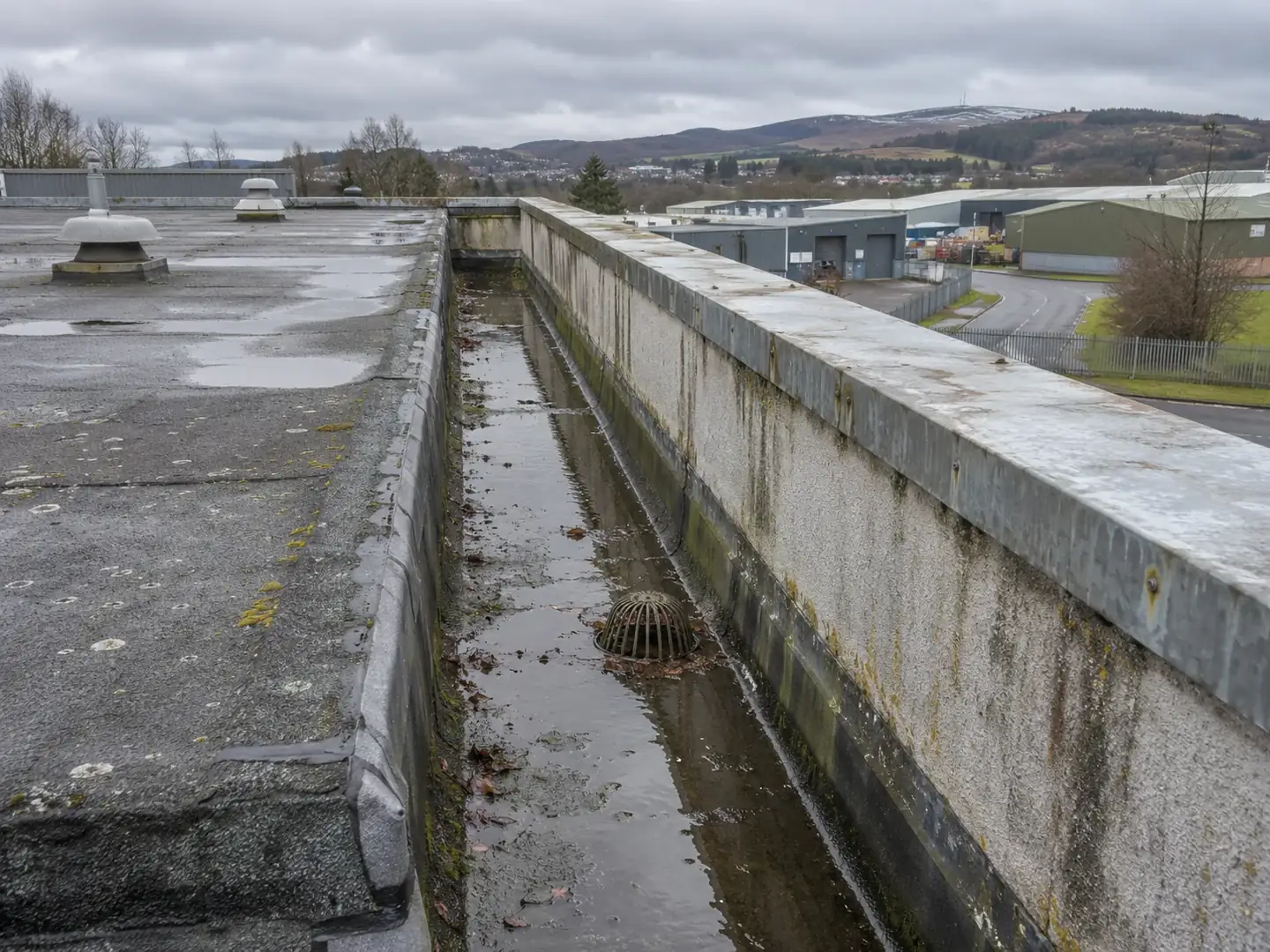
On a house, a blocked gutter drips down the wall and you notice it. On a shop, office, warehouse or block of flats, the gutters are often hidden, and you may not notice a problem until water is coming through the ceiling.
This post is about two of those hidden types, box gutters and valley gutters, and why they need a plan.
What box and valley gutters are
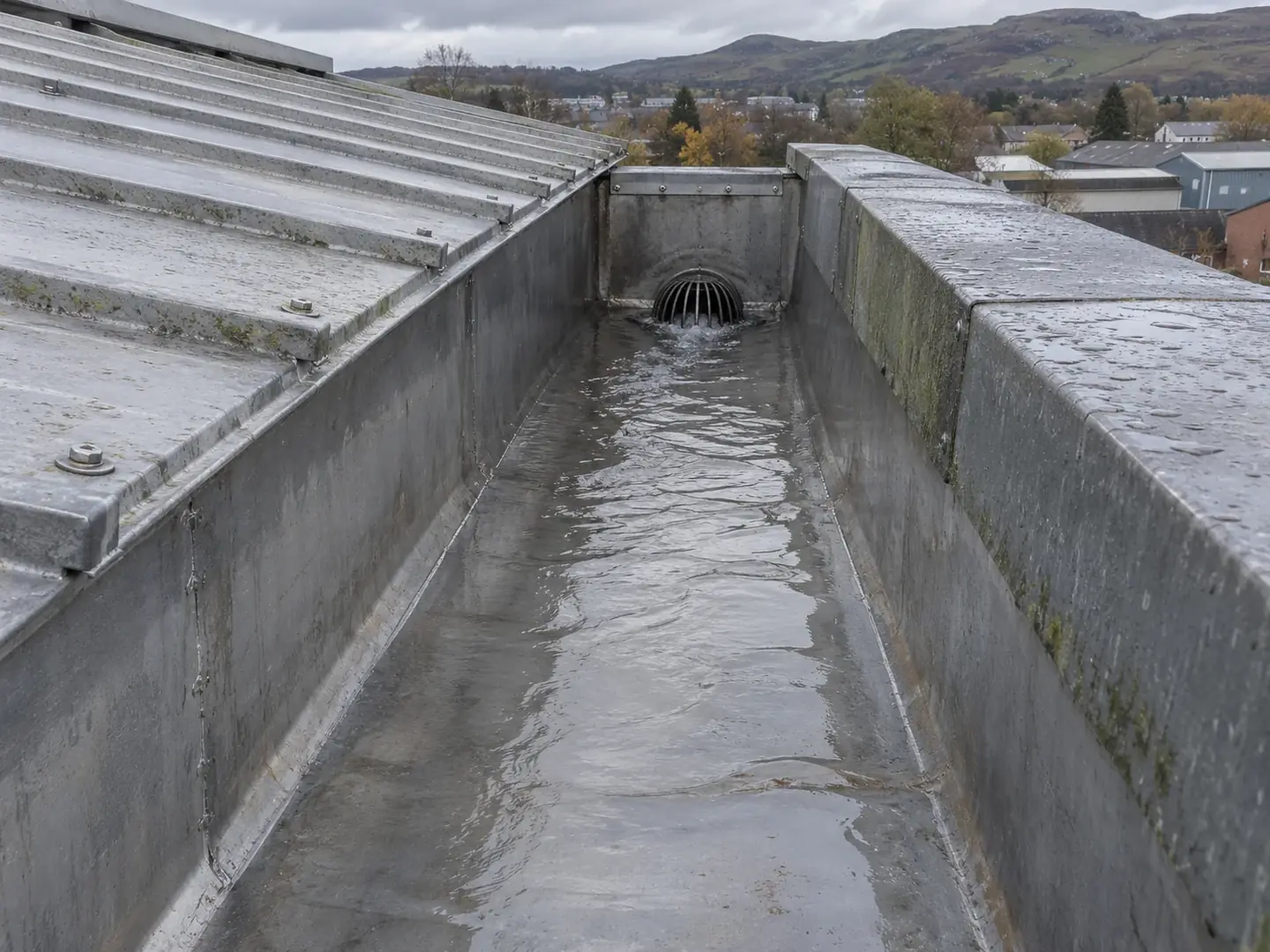
- Box gutter: a wide, square-sided channel, usually behind a parapet wall or between roofs. It carries a lot of water from a large roof area.
- Valley gutter: a channel where two roof slopes meet, collecting water from both sides.
Unlike the half-round gutter on a house, these often sit within the building line. You may not be able to see them from the ground at all.
Why they block
Several things combine on a commercial roof.
- Size of roof: a large roof sends a lot of debris to one place.
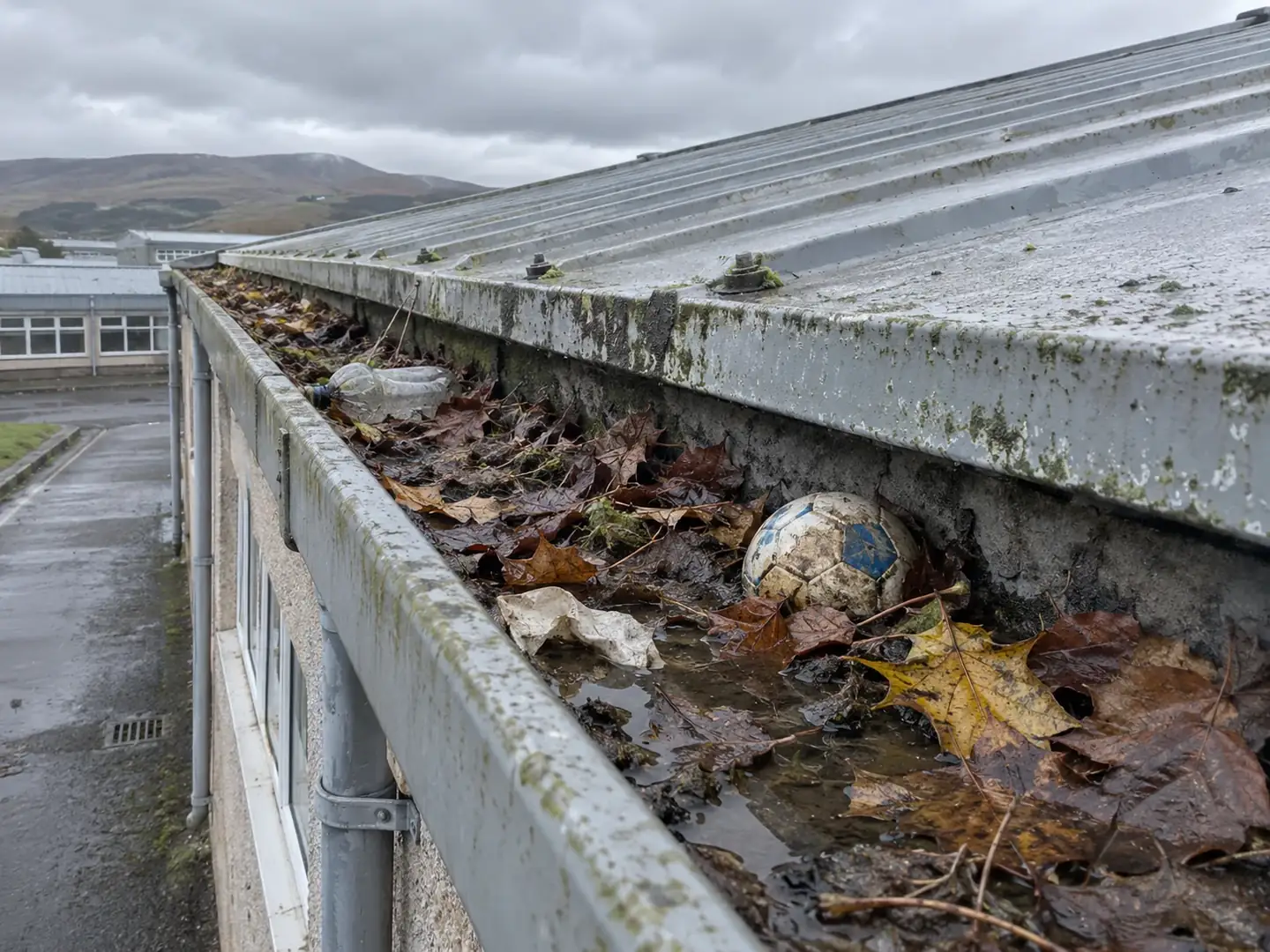
- Shape: the channel is flat and wide, so silt settles instead of washing away.
- Hidden position: nobody looks, so a small build-up becomes a large one.
- Moss and grit: these wash off the roof and settle in the gutter.
- Trees and neighbours: leaves from nearby trees blow onto flat roofs and into outlets.
What happens when they overflow
A box gutter that cannot drain does not drip politely down the wall. Water backs up behind the parapet or the roof edge and goes looking for a way in. It can soak the wall, get under the roof covering or come through the ceiling inside.
It can also cause damage that is slow to see: damp in the wall, staining, and decay in timber or fixings. By the time the sign appears indoors, the water may have been getting in for some time.
How often should they be cleared?
There is no one answer, and anyone who gives you one without seeing the roof is guessing. As a rule of thumb:
- At least twice a year: spring and autumn suit most buildings.
- More often: if there are trees near the building, or a history of blockages.
- After storms: a quick look after severe weather is worthwhile, particularly for flat roofs.
We would look at the first clean, tell you what we found, and then suggest a schedule that fits the building and not a generic one.
Getting to them safely
Work at height is the real issue on commercial buildings. We use a gutter vacuum with reach poles from the ground where we can, and a tracked access platform for taller buildings, up to four storeys, so nobody works from a ladder. That also means a property manager can ask for safer working practices in writing.
Our commercial gutter cleaning in Glasgow page covers what we do for shops, offices, industrial units and blocks of flats.
What a commercial clean involves
- We look at the building, its height and how we can reach the gutters.
- We clear the channels and the outlets, and check the pipes can take the water.
- We photograph the result and tell you if there are cracks, loose joints or damaged outlets.
- We say how often we think the building needs it.
Price depends on the building, the access and the amount to clear, so we quote for each one. Send us photos or call us, and we can say what is needed.
Questions property managers ask
Can you tell me how many outlets I have?
We can count them during the visit and note where each one drains.
Do you report what you find?
Yes. We send photos of the cleared channels and point out any damage, so you have a record.
Is a flat roof different from a pitched one?
The principle is the same, but a flat roof tends to hold more standing water and silt, so blockages show up sooner and cause more trouble.
Who should arrange the clean?
That depends on your lease or management arrangements. We deal with whoever is responsible and can send the photos and notes to them directly.
Putting a plan in place
For a building you manage, the simplest thing is a regular date in the diary. Pick a spring and an autumn slot, keep a record of what was found, and add a storm check. When blockages are found early they cost a clean. When they are found through the ceiling they cost a lot more.
If the same outlet blocks again and again, it may point to a downpipe problem, which is covered in our post on why a downpipe keeps overflowing. If you are not sure what sort of gutters you have, call us and we will help you identify them.